
Monisha Ahmed,
with Changpas of Ladakh
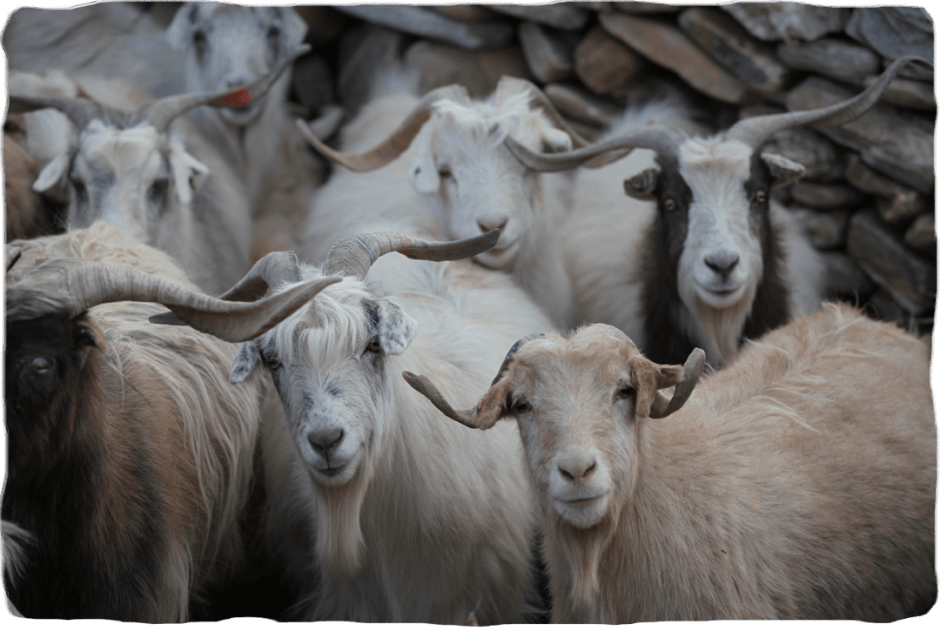
Pashmina goats are now the source of a new affluence for the Changpa and while they kept fewer goats in the past, now many more are visible. Photograph Tsering Wangchuk Fargo.
For the grass that you have just eaten, Oh goat,Give us some good pashmina.For the water that you have just drunk, Oh goat,Give us some good pashmina.Sit down on the grass and be still, Oh goat,So that we can take out your pashmina.
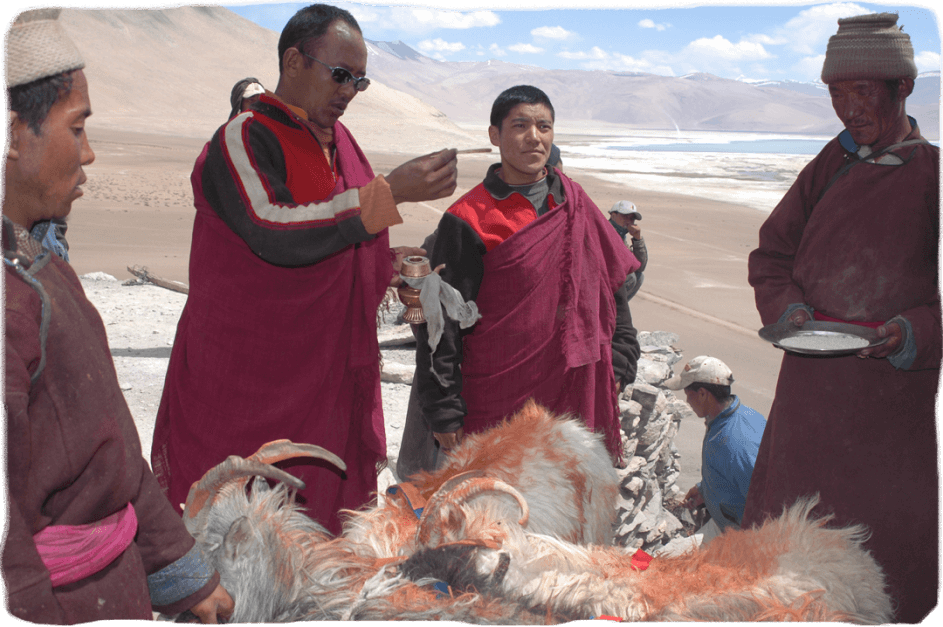
Goats being blessed – A monk blesses pashmina goats consecrated to the gods. Now that pashmina goats are important to the Changpa economy, they are well looked after and revered.
It was a late evening in June and Tharchen sang this song while he was busy combing pashmina out of one of his goats. It was getting dark but Tharchen combed slowly, careful not to hurt the animal. He knew that a sudden harsh yank could injure the goat, pulling at its flesh and drawing blood; such injuries can cause animals to succumb to their wounds. In a land devoid of agriculture, pashmina goats are a precious commodity for the Changpas, their fibre a major cash crop.
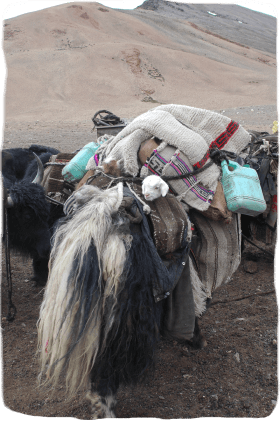
Goats are especially well looked after as they ensure a steady supply of pashmina. Here, two newborn kids, too frail to walk, are carried in small saddlebags on the back of a yak when the camp migrates.
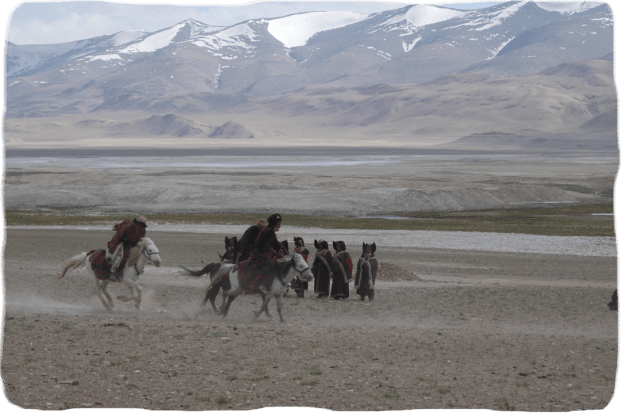
Horses were once a sign of prosperity and reverence for the Changpas, and in a year three horse races were held to mark that. This position has now been usurped by cars and jeeps, and the Changpas keep far fewer horses than they once did.
The Changpa live at an altitude of over 4,000 metres, moving on the Changthang plateau with their herds of yak, sheep, and pashmina goats. The Changthang is an arid, cold desert, where little grows but the Changpa maintain a delicate balance with nature, forever careful of its scare resources. Over the centuries they have evolved an indigenous and effective rangeland management system that involves regulations of their movements with available pasture.
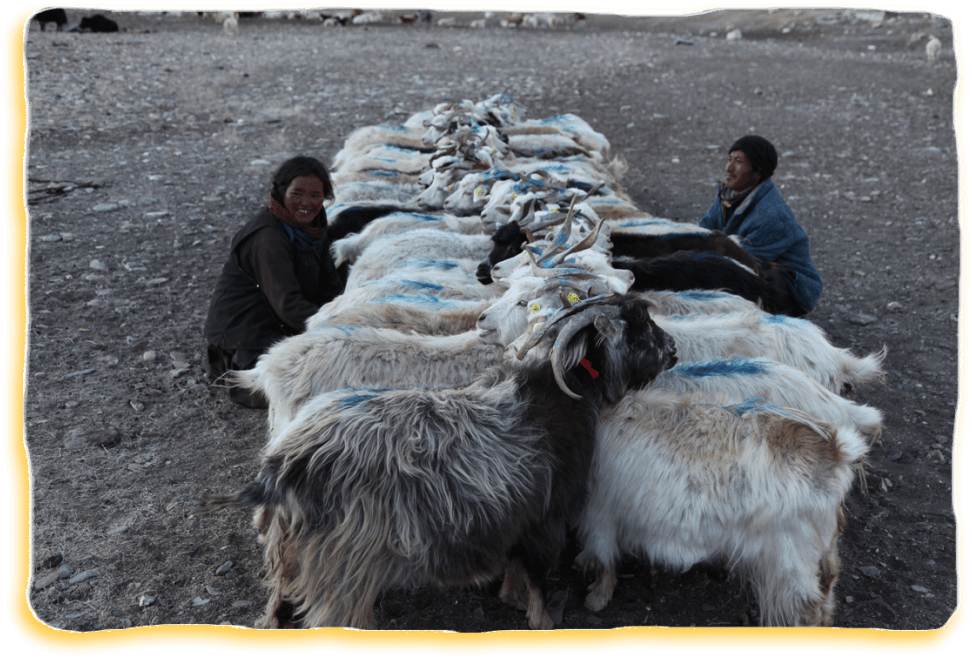
The goats are milked twice in the day, early morning before they set out to pasture and when they return. Neatly tied in two rows, the milk the animals produce form a large part of the Changpas’ diet as well as oil for the monastery’s offering lamps.
Goats are cherished amongst the Changpas today as they are the source of a new income and their numbers have increased tremendously, but it has not always been this way. Elders remember a time when they kept far fewer goats as their pashmina was worth even less than wool! Instead, it was the pashmina from western Tibet that the market demanded. Goats were less valued animals, appearing in verbal abuses and disliked by shepherds as they walked fast and were difficult to keep up with.
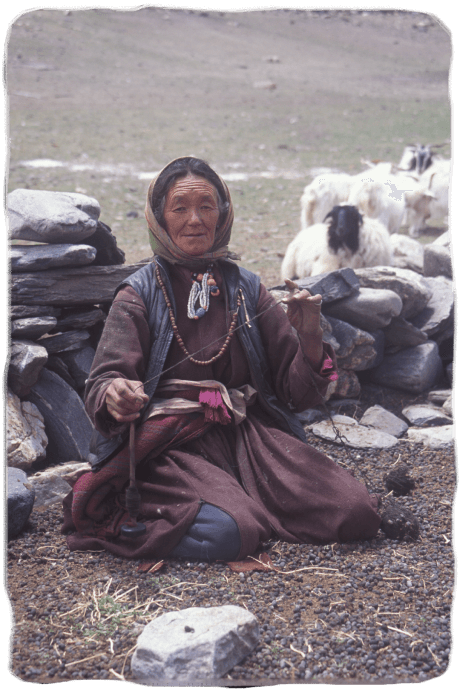
Before weaving can commence, the wool has to be spun and then twisted. Tashi Zangmo turns the wooden spindle as she twists the yarn from two balls of yak wool together.
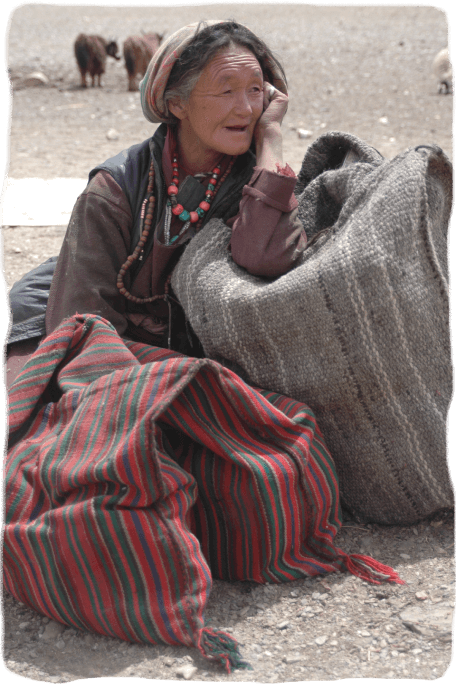
Saddle-bags are widely used by the Changpas to carry their belongings when they move camp. Resting between moves, Tashi Zangmo props herself up on two different kinds of saddle-bags – a grey one made of goat hair and woven by men; a brightly coloured striped one from wool and cotton by women.
But when the border with Tibet closed in the early 1960s all this changed. And while sheep continue to be important, as their fibre is needed for weaving a range of textiles, goats are the new status symbol. There are consequences to this also, amongst them a strain on pastureland, but for now the Changpas are not concerned by these.
Monisha Ahmed is an independent researcher whose work focuses on art practices and material culture in Ladakh. Her doctoral degree from Oxford University, developed into the book Living fabric – Weaving among the Nomads of Ladakh Himalaya (2002). She has published several articles on textile arts of the Himalayan World as well as other areas, co-edited Ladakh – Culture at the Crossroads (2005) and collaborated on Pashmina – The Kashmir Shawl and Beyond (2009). Formerly Associate Editor of Marg, she is co-founder and Executive Director of the Ladakh Arts and Media Organisation.

Tsering Wangchuk Fargo works in the travel trade in Ladakh, he established Fargo Travels in 1978 and the Apricot Tree Hotel in 2013. He has worked on several documentary and commercial films in the region, including one in Changthang, and has an active interest in photography.