Michael Benanav
with Van Gujjars, Uttrakhand
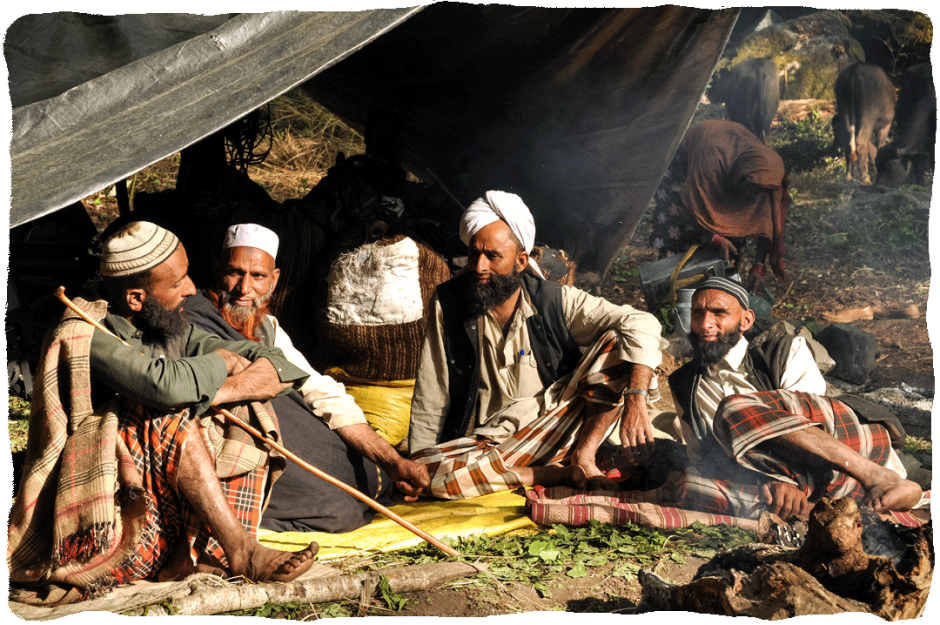
Several Van Gujjar men meet to discuss their best strategy for reaching the high meadows, and avoiding problems with Forest Department rangers along the way.
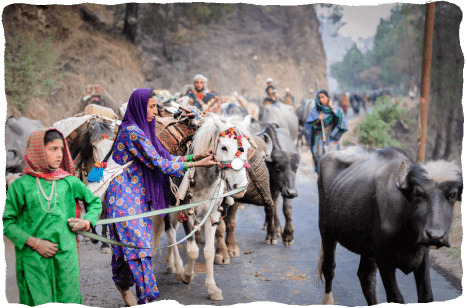
The Van Gujjars are nomadic water buffalo herders who live in the forests and mountains of northern India. Traditionally, they dwell in the wilderness, where their world revolves around the feeding and well being of their animals. They spend the winter months in the lowland jungles of the Shivalik Hills, where thick foliage provides plenty of fodder for the buffaloes. Each April, however, temperatures there soar above 110 degrees;the leaves and grasses wither and die; creeks run dry. With nothing left for their animals to eat or drink, the Van Gujjars must move. Entire families, from infants to the elderly, trek with their herds up into the Himalayas, where melting snows reveal lush alpine meadows laced by gurgling streams. When the cold sets in at the end of September, they head back down to the Shivaliks, where the jungle has sprung back to life following the monsoon rains. The tribe has followed this cycle of seasonal migration – up in summer, down in winter, shunning settled village life – for over a thousand years.
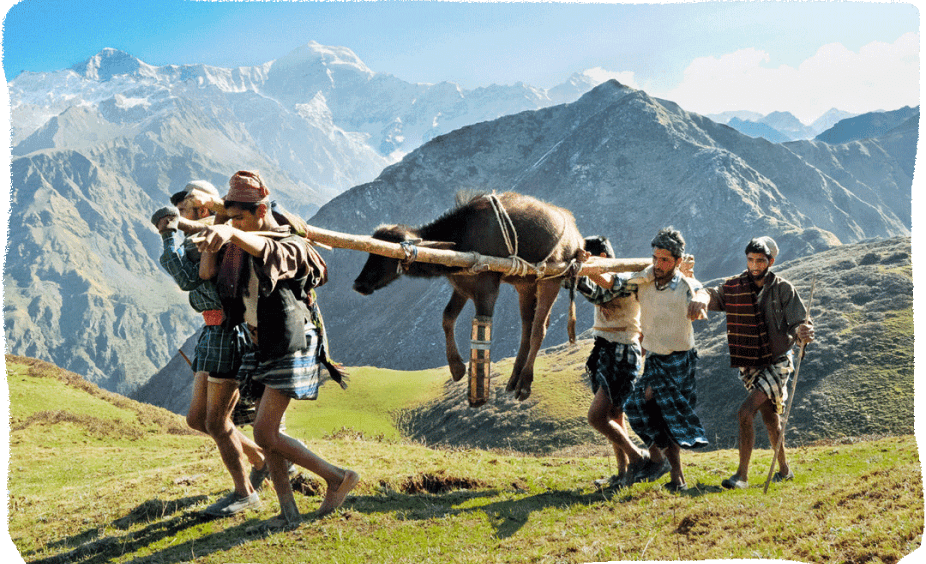
After a buffalo yearling suffered a broken leg, she was carried up and over a Himalayan pass, to the meadow where her Van Gujjar family would spend the summer. They refused to leave her behind to die.
Van Gujjars have special emotional relationships with their buffaloes, loving them as family members, and tending to them with devotion. They name each buffalo, and mourn for them when they die, almost as if they were human. As a result, they use the animals only for their milk, never slaughtering them for meat. In fact, though they are Muslim, Van Gujjars are traditionally vegetarian.
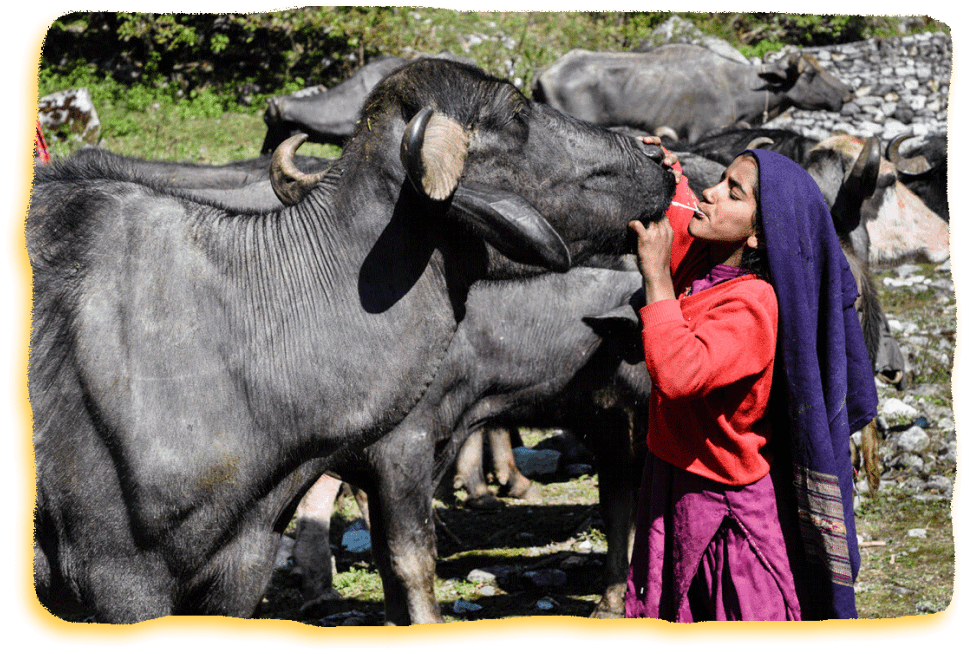
Guess what the Van Gujjar lady is doing here?
The buffalo has just delivered a calf, and is unable to feed it! Perhaps traumatised, tense, her udders are not producing any milk. The buffalo is emotionally close to this woman who goes on to ease, relax her by squeezing a few drops of milk straight into her mouth and then spurting it into the buffalos mouth! This she repeats a few times and …lo behold, slowly the buffalo begins to milk regularly! Benanev has brought out here an intuitive practice that resonates with many other pastoralists across the country. In Kutch too, for instance, the Rabaris call this practice Ghordi.
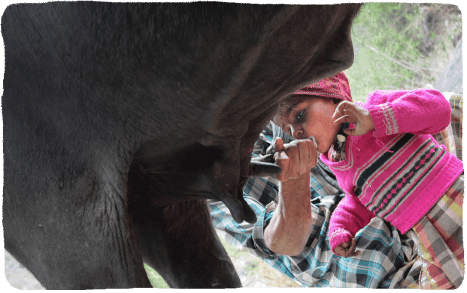
Four-year-old Karim gets his milk straight from the source!
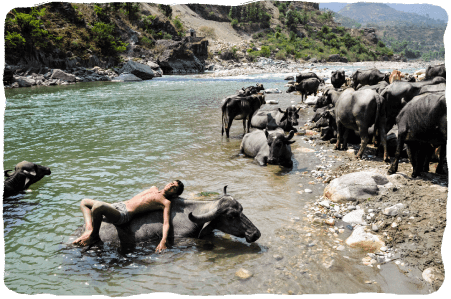
Even though they live in the wilds, hunting has never been a part of their culture. They have a profound understanding of the need to live in balance with nature, knowing that if the forest stays healthy, their families and their herds will stay healthy, and if the forest dies, so will they. Living sustainably has been the core ethic of the tribe since time immemorial.
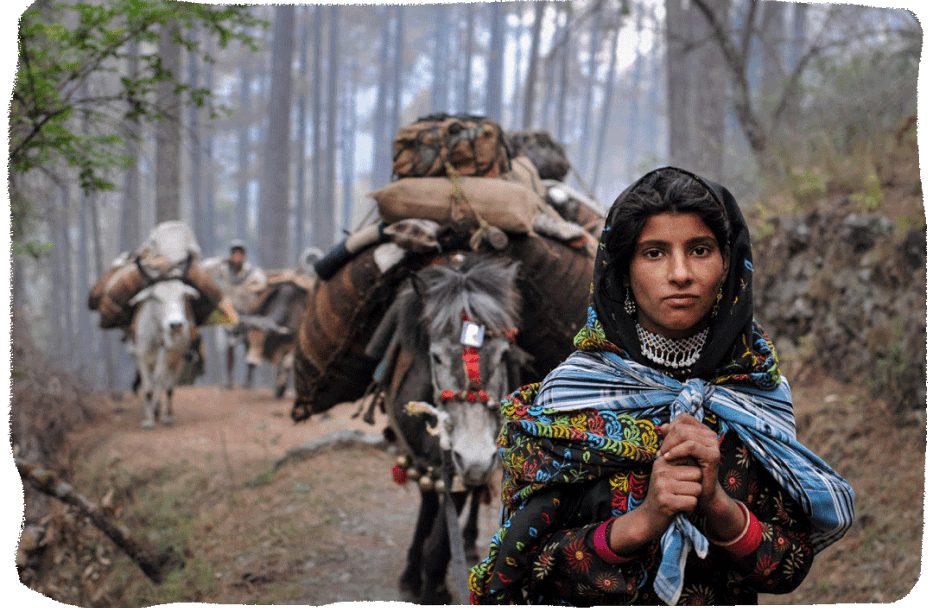
Mariam leads the caravan through the Himalayan hills, while carrying her young niece in the shawl over her shoulders.
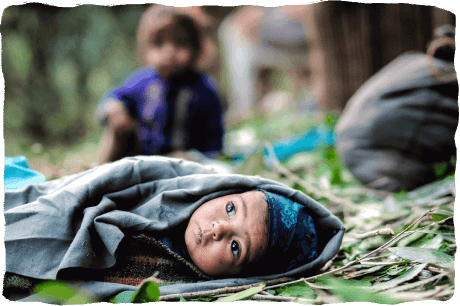
This young Van Gujjar is perfectly at home in the forest.
This young Van Gujjar is perfectly at home in the forest.
In 2009, I joined the Van Gujjars on their spring migration, traveling with one extended family from the Shivaliks up into the Himalayas. For forty-four days, I walked with them, ate with them, helped them with their chores, and slept beside them on roadsides and in the mountains. As the days passed, we became close and came to care for each other deeply. I got a very personal sense of their immediate struggles and joys, as well as their hopes and dreams and fears for the future-not as a stereotypical group of tribal forest-dwellers, but as unique individuals with unique personalities, desires, and concerns.
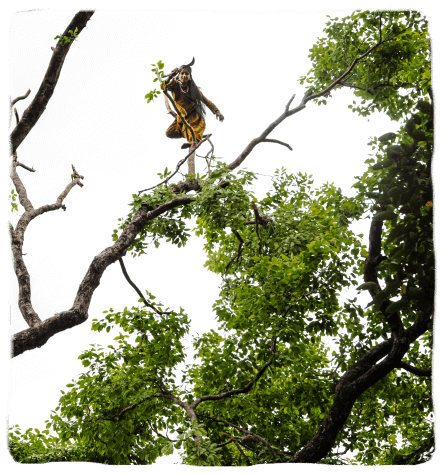
Seventeen-year-old Mariam lops leaves for her family’s buffaloes to eat, in the Shivalik Hills. Even though she is 20 meters off the ground, she wears no shoes, has no safety rope, and isn’t even holding on to anything. Van Gujjars know that they can’t cut too much off of any one tree, since they need the forest to remain healthy year after year after year, so their herds – and they themselves – can survive year after year after year.
It is my hope that my writings and photographs will give others who will never meet the Van Gujjars an intimate glimpse of their way of life, and will rouse sympathy for their struggles to adapt to a world that is changing rapidly around them, threatening the survival of their culture. The challenges they face include forced evictions from their traditional lands; the obvious shrinking of their forests due to logging, urban growth, and climate change; and the recent promotion by outsiders of more conservative forms of Islam than the Van Gujjars have ever before practiced.
Beyond all of that, I hope that through these images, by looking at their faces and into their eyes, you will feel a personal connection to the remarkable people who took me in like family, and sense their kindness, their dignity, their humor, and their humanity.
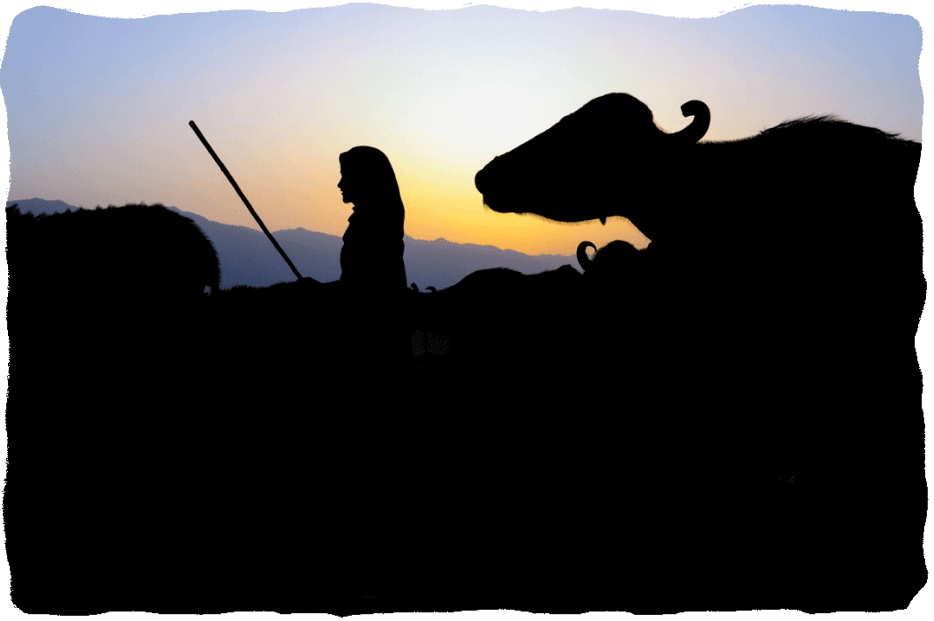
Twelve-year-old Bashi watches her family’s buffalo herd at dawn, while camped along the Asan River in Uttarakhand.
Michael Benanav is a writer and photographer whose work has long been devoted to issues facing nomadic peoples around the globe. He has authored three books, including Himalaya Bound: An American’s Journey with Nomads in North India, and is a contributor to The New York Times, Geographical Magazine, and other international publications. He is also the founder of Traditional Cultures Project, which creates online multimedia documentary projects about traditional and indigenous cultures worldwide. He lives in New Mexico, USA.