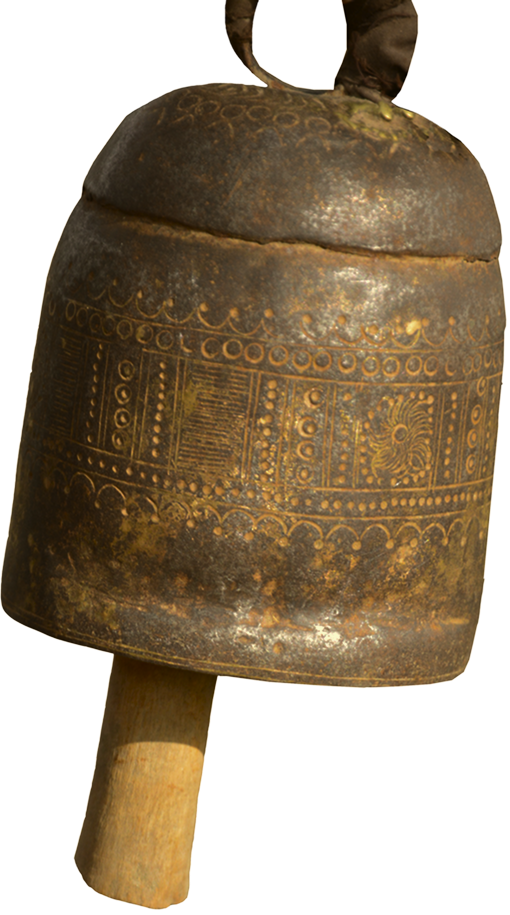

One tends to associate the jingle of bells with a herd of cows crossing the road, reaching for their homes as dusk sets in. Their swinging bells announcing dusk and the return of the herd.
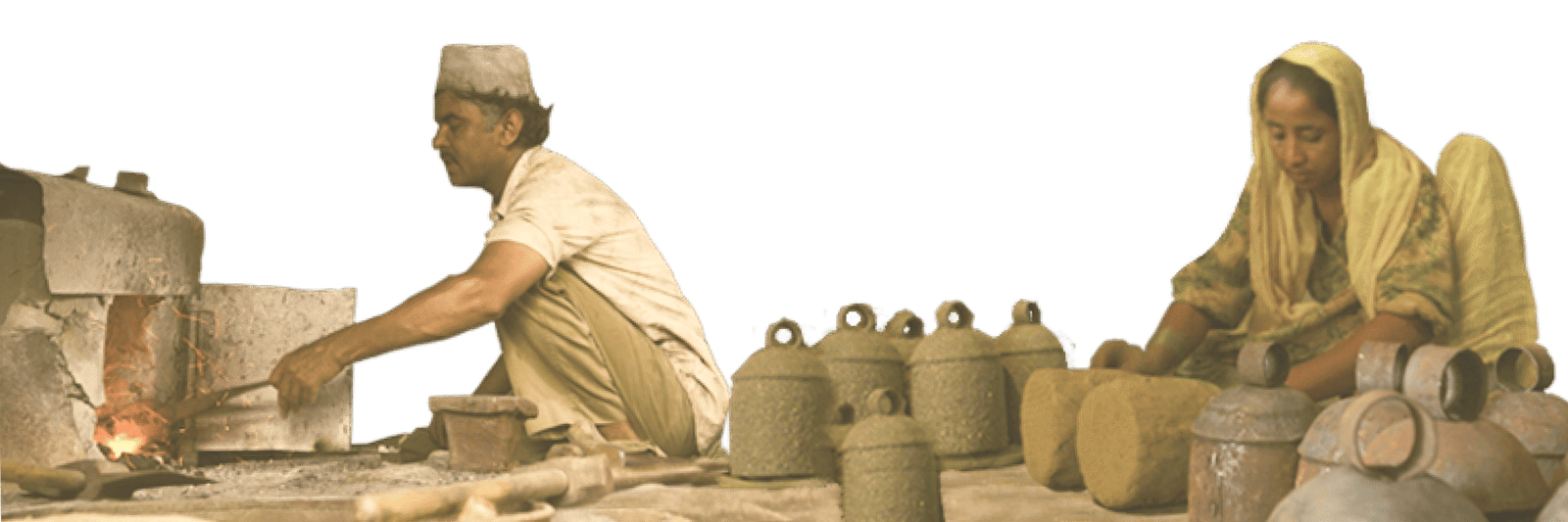
In Kachchh, as in other pastoralist terrains, the sweet sound of the copper coated bells worn by the maal (livestock), carry tales of long held bonds between Maldharis, and the Luhars who craft bells for them. Bell tuning is a finely honed art that begins with the artisan and is refined by the Maldhari. Between cups of chai and chatter, the luhar customizes bells to the needs of the Maldhari.
“In Kachchh, the sweet sound of the copper coated bells worn by the maal (livestock), carry tales of long held bonds”
~Ibrahim Mohmmad Luhar

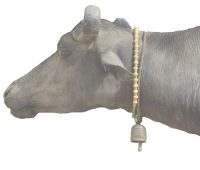
Copper bells are an intrinsic part of herding life; their sounds mark place and identity. Variations in the size and sound of the bell can help identify the breed, the herd, and even the herd’s owner. Three main tones exist – the Sarai, the Utthod, and the Hakkad – each assigned to different types of animals, different age groups within the herd, or different personalities. The bells chime, in different notes, and outline an aural map that will tell the herder where her lead buffalo is, or if a naughty camel has gone astray! On the broadest level, copper bells indicate the general location of a herd. On the finest level, bells placed on designated animals indicate whether it is the front, middle or tail end of a herd that is passing by.

For Whom the Bell Tolls
While the Luhar gives the Maldharis bells which are already tuned, some amongst the Maldharis are special sound artistes who fine tune the bells to what their animals will respond to. The art of tuning the bells has evolved over time and maldharis know how to coax a new sound out of a copper bell. For generations they have known that when a buffalo in labour listens to the sound of the Sarai it eases her delivery! The sound of bells can calm a badly behaved buffalo or a confused cow; just what the Hakim ordered!
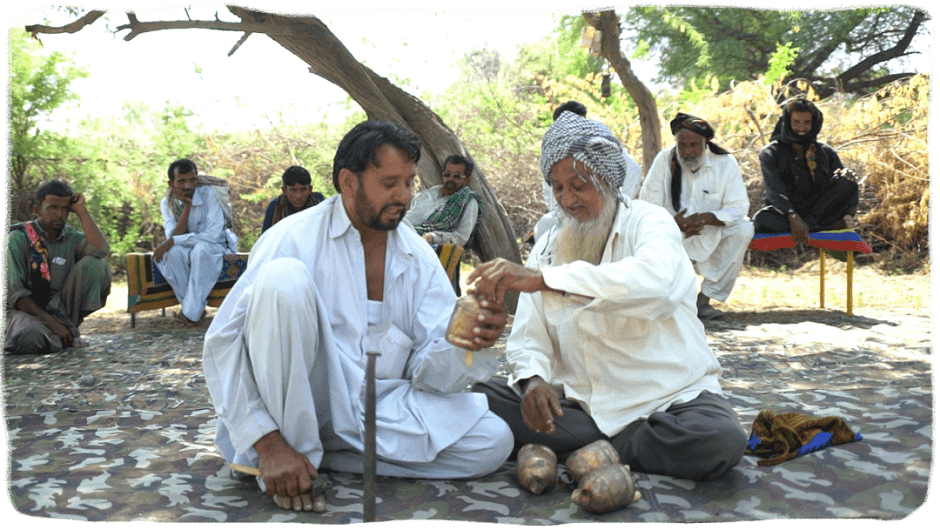
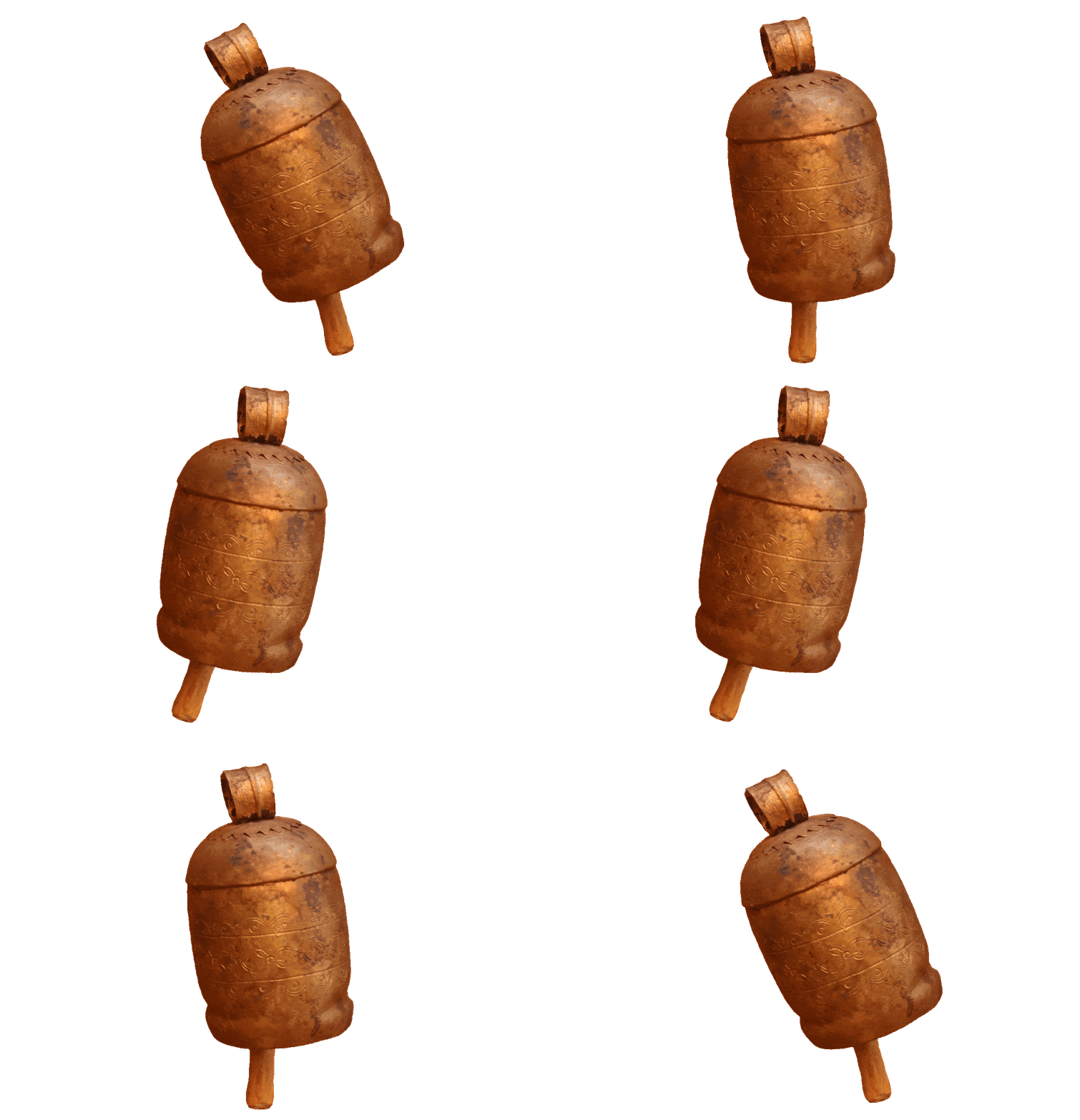
And so, any bell can be tuned by experts in maldhari communities to play a Sarai, a Hakkad, or an Utthod note.
Click the bells to hear their distinct sounds!
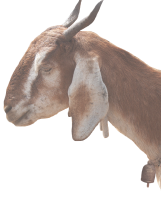
Sarai is the sweetest and most tuneful of all the three sounds, often worn by cows and goats. Sarai notes reverberate for a long while, and serenades many a maldhari’s heart!
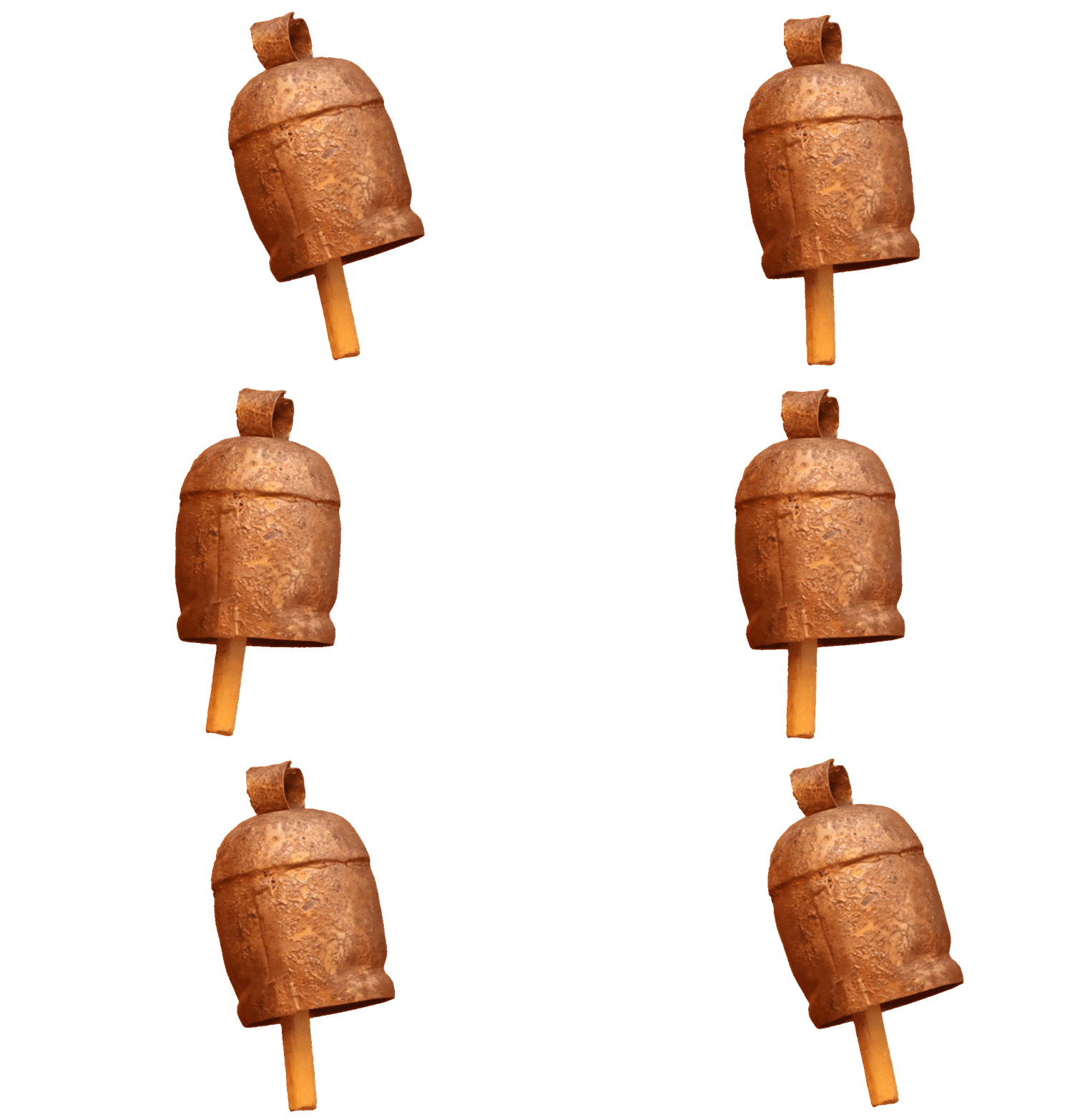
Utthod is like the Sarai, but only more hearty. Utthod bells are used more often on buffaloes.
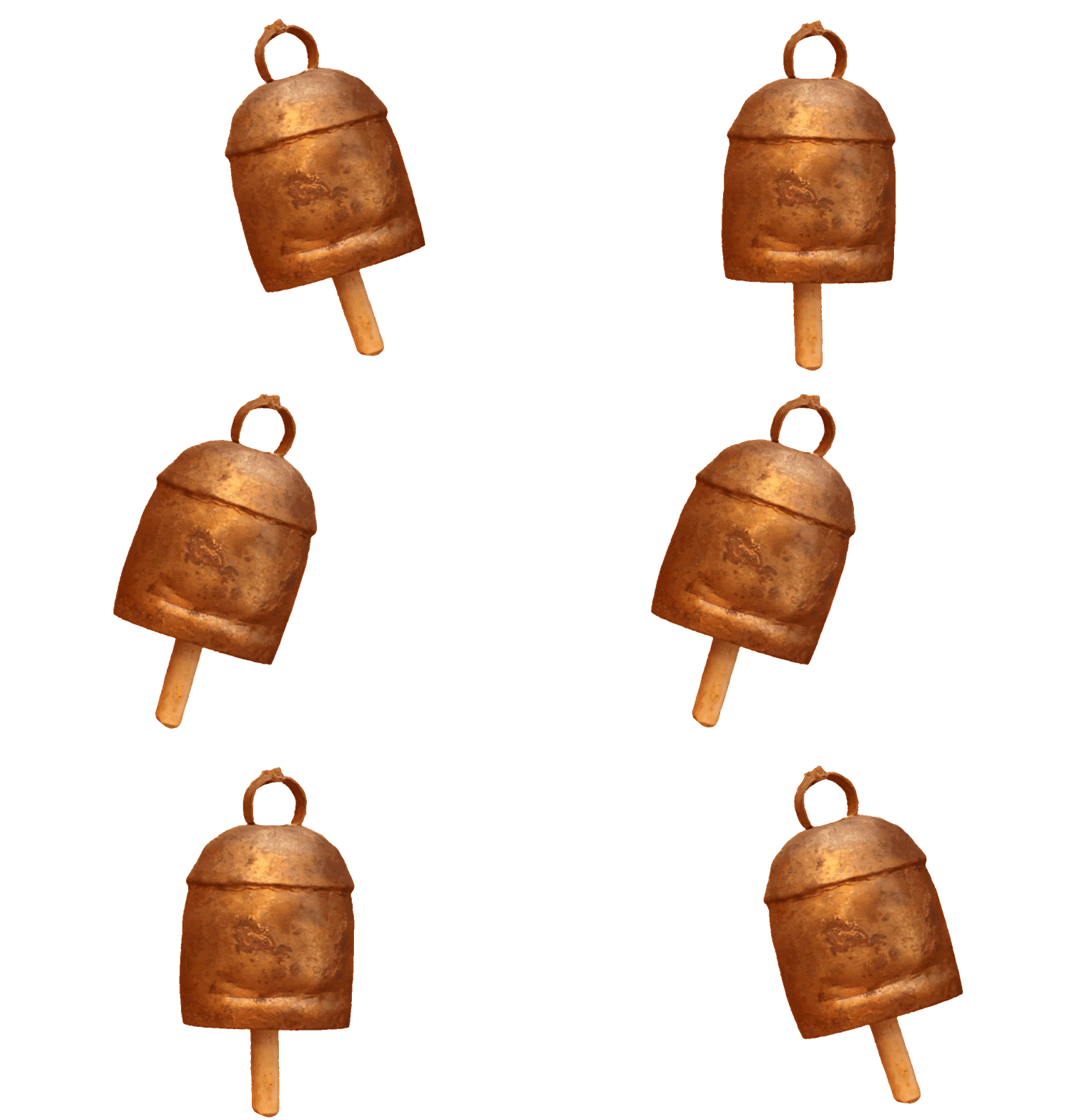
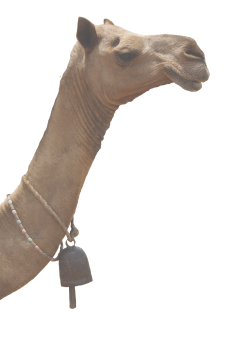
Hakkad has a very clear, big sound, and resonates across long distances. Hakkad bells are worn by camels, especially because they like to spread out as they graze.
Let’s hear what Shah Abdul Latif Bhitai has to say about it!

Comforts of the Dark
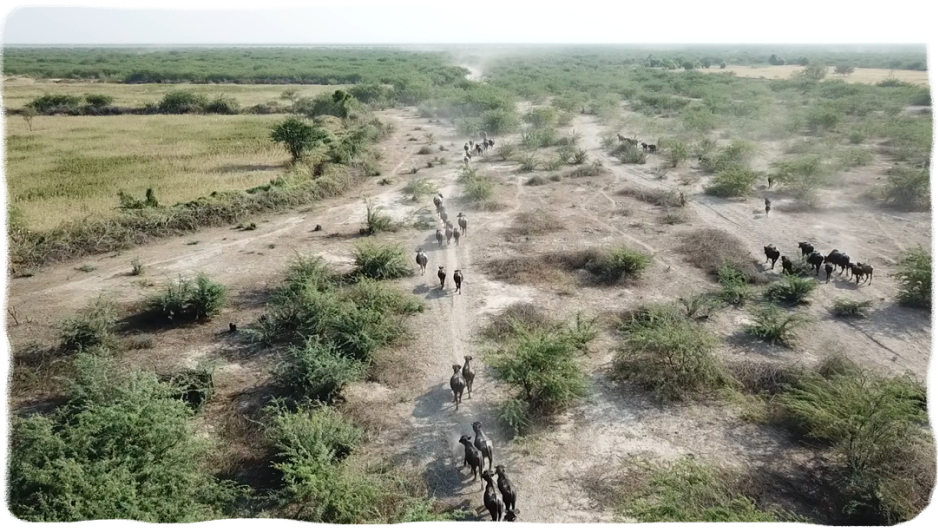
In the famed Banni grasslands, one of the largest in Asia, the Banni buffaloes have adapted themselves to the scorching heat of the day by grazing in the night, unaccompanied by their herder. As the moon rises, they lose themselves in vast maze of tall grasses. Hidden from sight, they can be tracked only by the far and clear tinkling of the ‘mattr’, as these bells are called in sindhi.
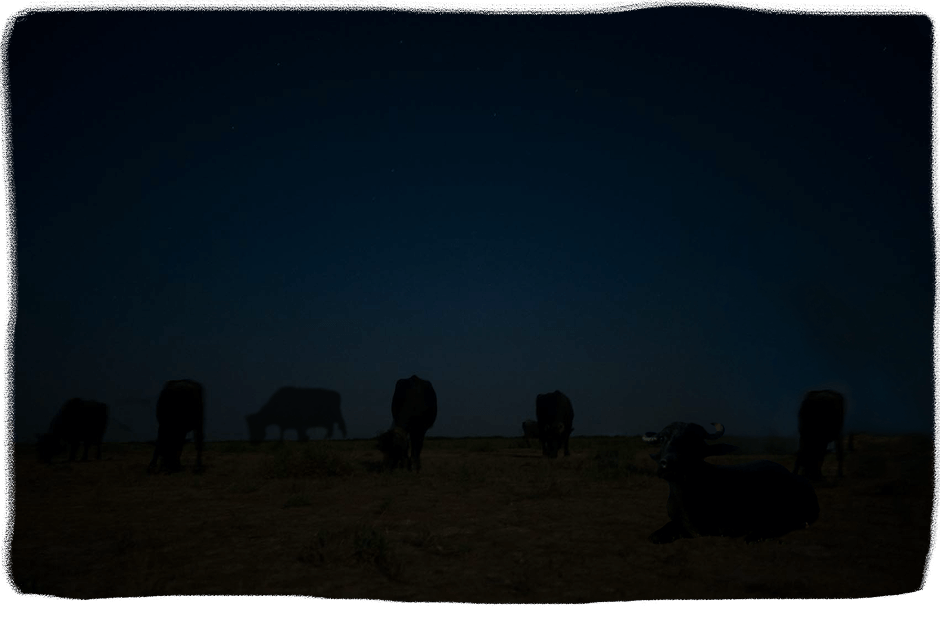

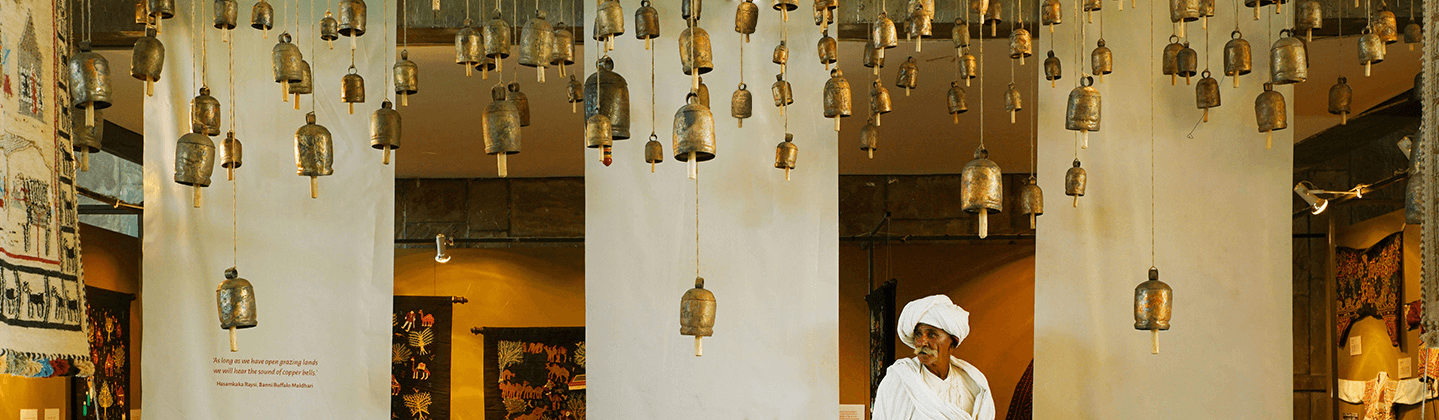
‘As long as we have open grazing lands, we will hear the sound of copper bells.’
~ Hasamkaka Raysi, Banni Buffalo Maldhari from Banni
But what happens when the grassland begins to lose its luxuriant grasses?
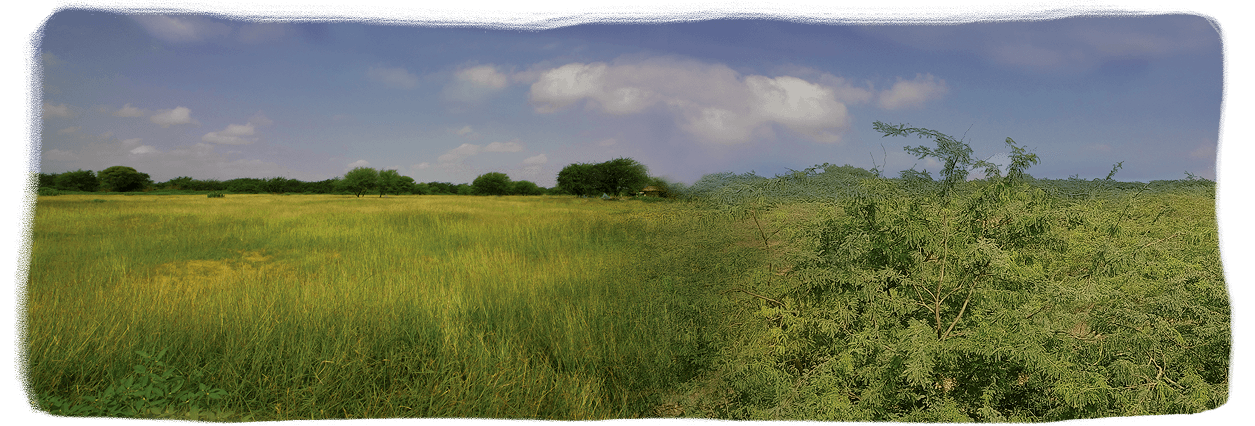
In the early 1960s, Banni became home to an exotic shrub – Prosopis Juliflora – locally called ‘ganda bawal’ or the mad acacia, in Banni. The grasslands began to change. This stranger and its dissonant notes entered the stage to slowly hijack the composition. Ganda Bawal has become now a demanding invader and Banni finds it hard to nurture her favourite grasses in its presence. In a land growing more devoid of its luxuriant grasses, the buffaloes are less hidden, and the bells a less essential in tracing the maldhari’s animals.

“We believe in buying from the Luhars, it is a tradition. Buying from the bazaar is business.”
~ Hasamkaka Raysi, Banni Buffalo Maldhari from Banni
With changes in the Banni grassland eco system, the maldhari’s demand for bells may have diminished, just a little bit. But a global economy has been swift in noting the skill of the bell makers of Jura village. Artisans today ship their bells to all corners of the globe and urban consumers use the bells as wind chimes, door-bells, and to create interesting interiors.
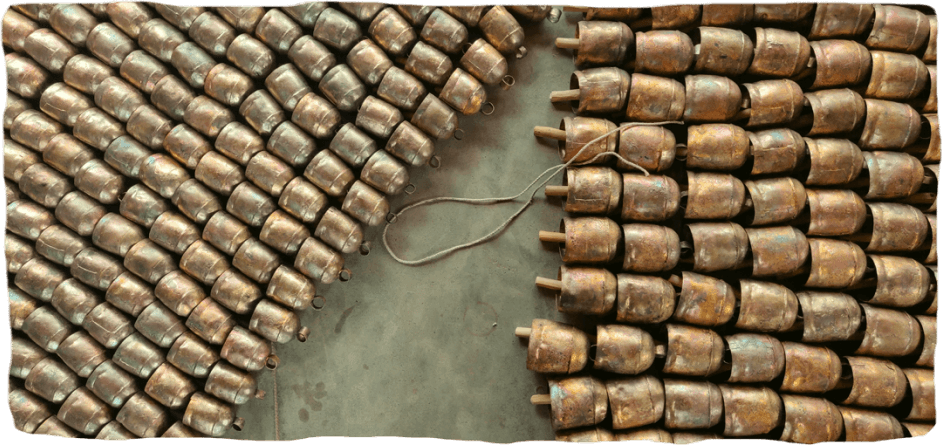
The luhar bell makers, heavily dependent on urban markets now, are also more exposed to the shocks and shifts of a global economy. But the camaraderie between them and the maldharis remain steady.

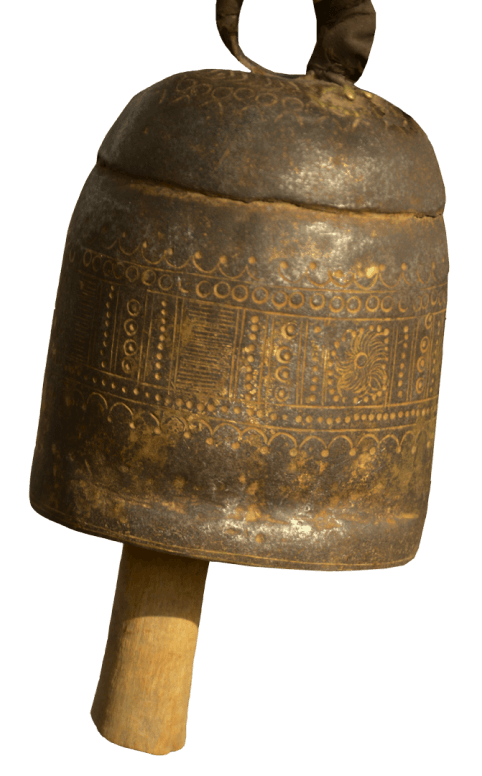
The Luhars still keep the highest quality bells for the herders, who unlike the tourist, does not get enticed by the beauty of the bell, but responds to the emotive presence of the bell.
And the Maldhari continues to pay far more than the urban customer for that special bell. These high cost bells carry a life-time service agreement. When the lustre fades, or the sound changes, the Luhars refurbish the bell with no questions asked, no payments made. Even today.
Oh Bell!
~Shah Abdul Latif Bhitai
Oh bell!
How do you resound
With the Beloved’s sound?
The bell replied,
Flung into fire
I was born out of loss
Carved out of iron
Burnt by the blacksmith
Melted into shape
Singed by flames
Blisters on my skin
First the pain of separation
Then the hammer’s blow!
Placed on a slab
My head was cut off
Patterns carved on my skin
With a chisel
With Allah’s blessing
A hook was driven into my heart
And in my mouth
A gong was hung
Only then did I chant
Says Abdul Latif
The name of the Beloved