
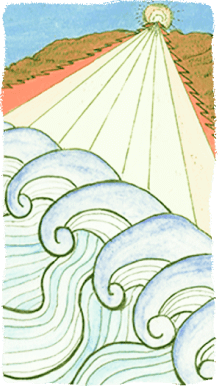
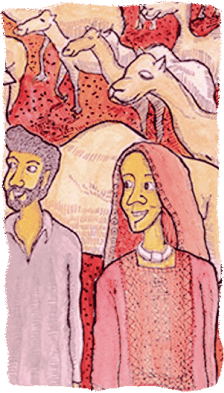
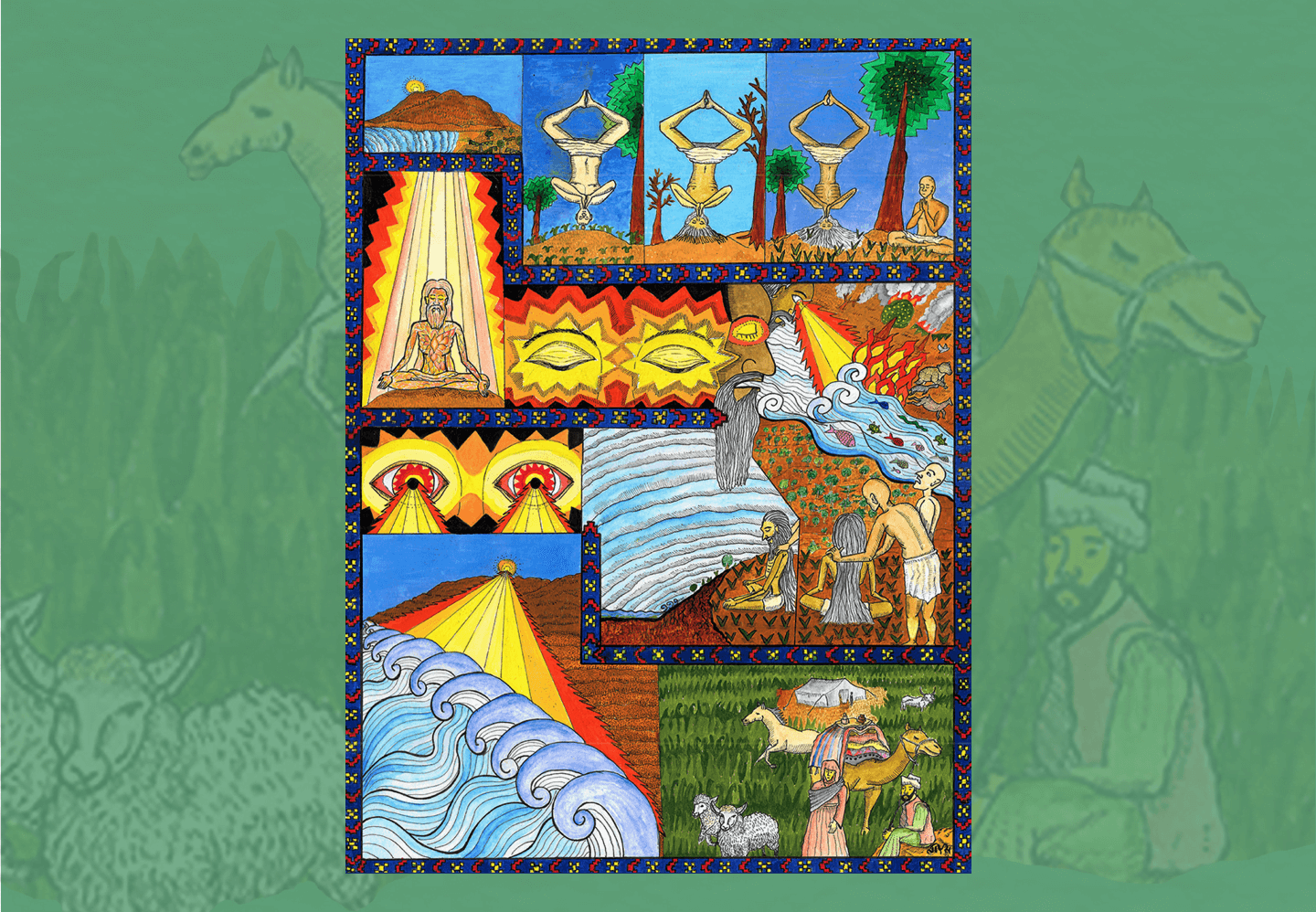
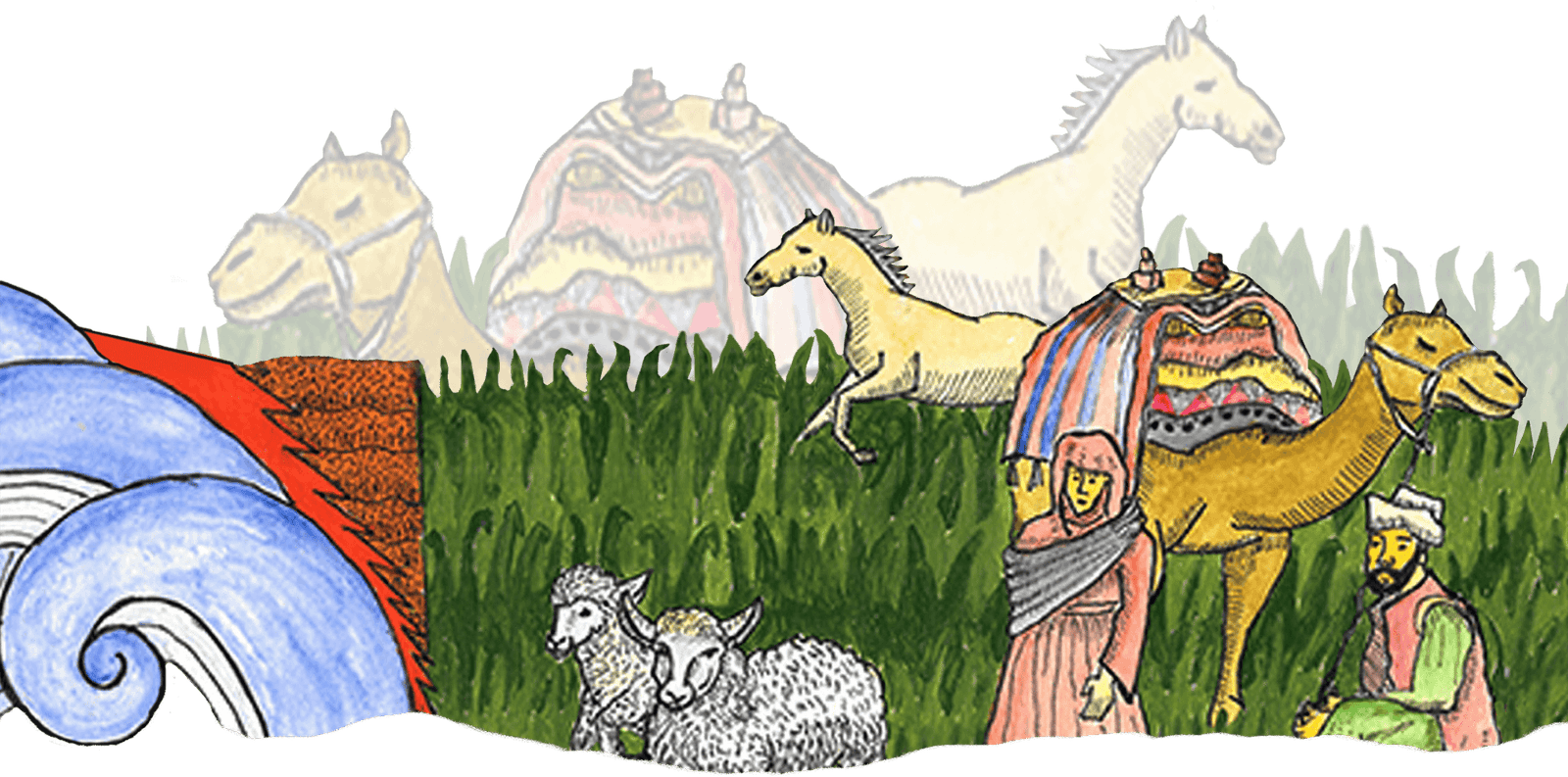
Banni, in Kachchh, is one of Asia’s largest and richest grasslands. It is celebrated for its biodiversity. This grassland is home to the cattle herding Sindhi Madharis of Kachchh. This grassland apparently derives its name from the Hindi word बनी हुई (Bani Hui). Tapas narrates the story as we watch visuals from this artwork depicting Banni’s creation.
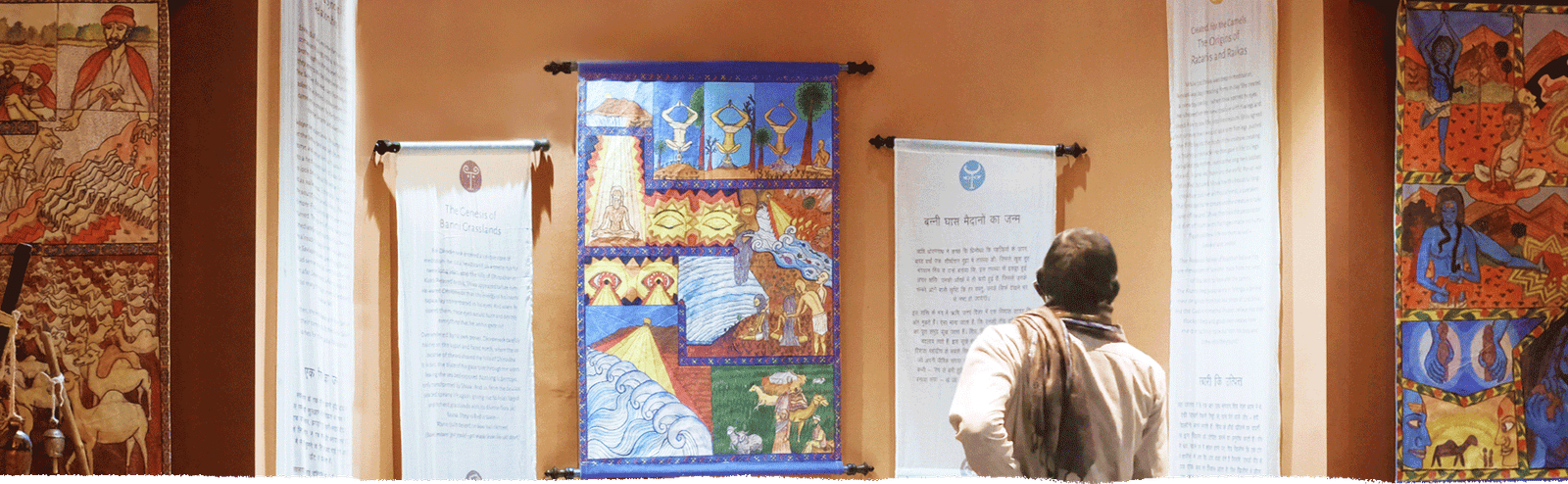
Genesis Stories
Why do pastoralists persist despite shrinking pastures, a disinterested younger generation and a polarised polity? Why do they continue in this profession despite so many challenges, we ask in bewilderment?
In response, every pastoralist community begins by sharing their stories of origin. These are always part of a larger tapestry of stories that remind them of their relationship with earth, its elements, and the sentient beings that inhabit them. They are not allowed to forget that their animals are their spiritual kins. They are born to herd them; and so they do.
Living Lightly presents three such stories of genesis from Kachchh. One speaks about how the grassland of Banni came to be, the other tells us why Rabaris and Fakirani Jats, Hindu and Muslim camel herders believe they are brethren, and the third traces the origin of the Rabaris – one version amongst many!
Living Lightly presents three stories of genesis from Kutch. Each strikingly sketched by Tapas Upadhay, an artist based in Bhopal.
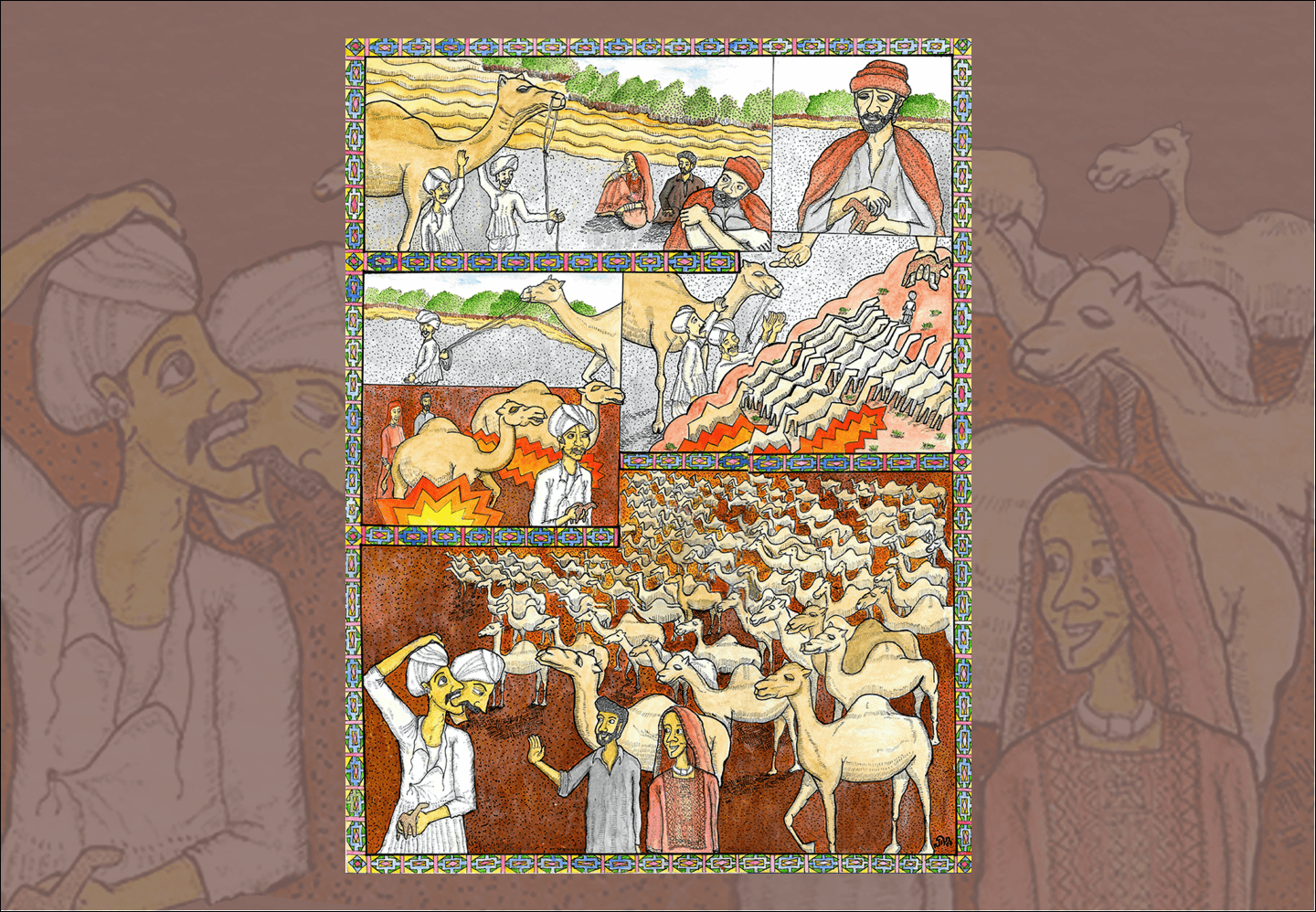
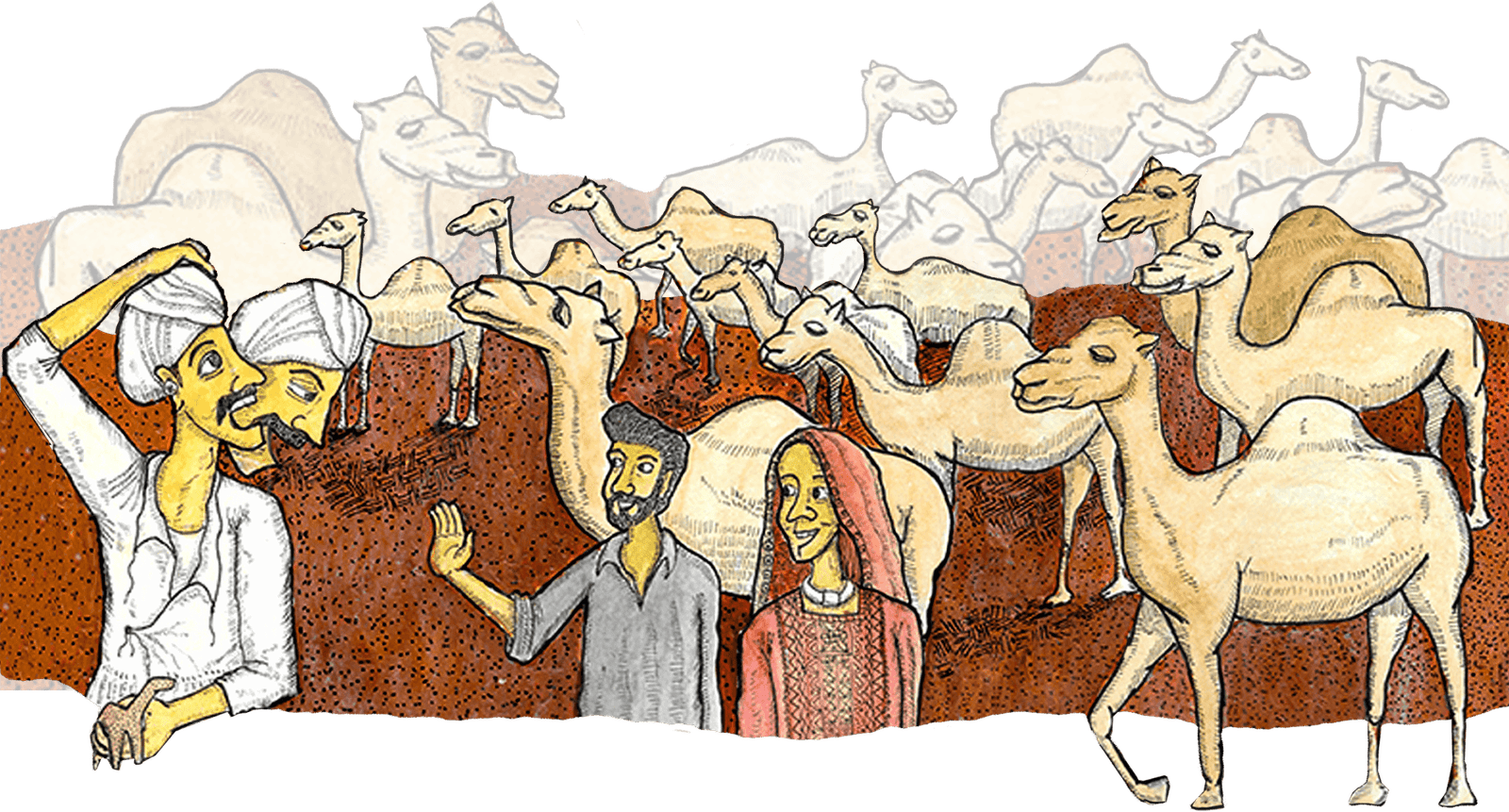
The Hindu Rabaris and Muslim Farikarini Jats of Kachchh believe they are locked in brotherhood. Both the communities, to this day, continue to be bound by bonds of belief, duty and interdependence. Most Kharai camels owned by Rabaris have been grazed and guarded by Fakiranis for generations. How did this incredible relationship come to be? One cannot but suspect some element of mysticism!
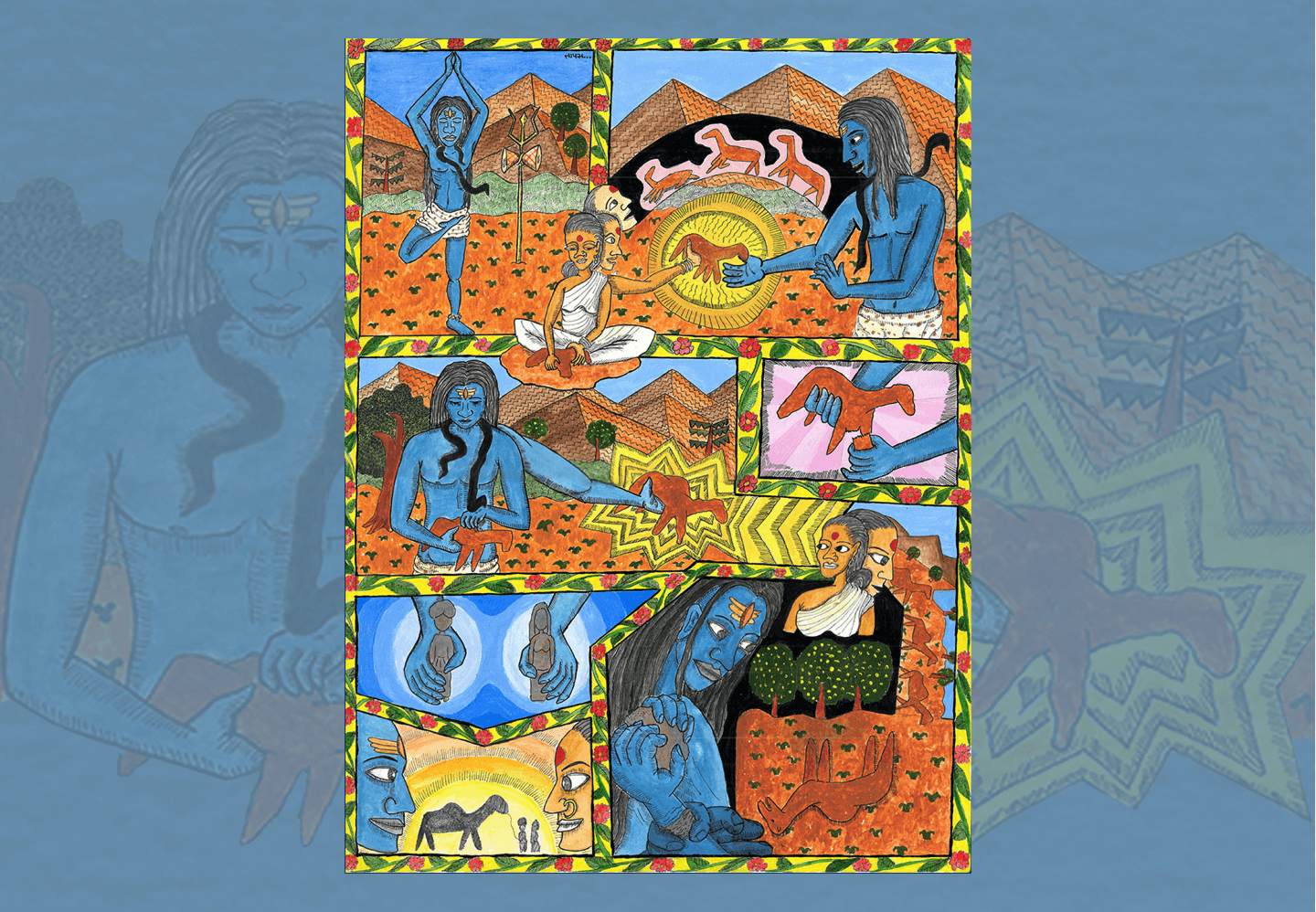
The Rabari herders of Kachchh consider the Camel to be a manifestation of the divine and camels are worshipped as Meldi Mata. The Rabaris believe they were created to look after camels and consider them primary members of their family! But when did this deep bond between the Rabari and her animal begin? Let us listen in.
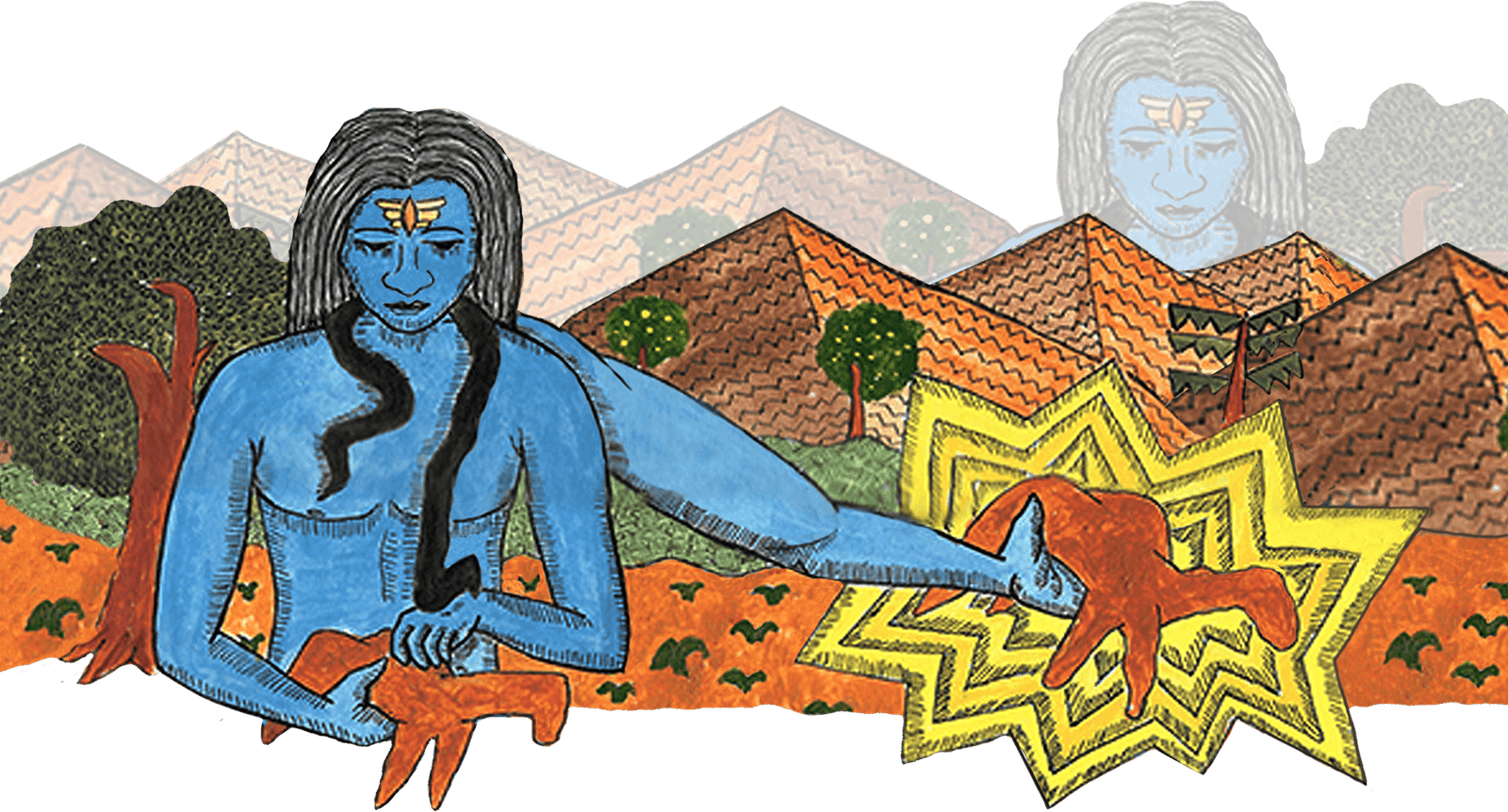
All Illustrations by Tapas Upadhyay